Beat your personal bests.
Your best times from 1 km to the marathon, found inside every run, with a top 10 for each distance, your longest runs, your biggest weeks and what time you could run in your next race.
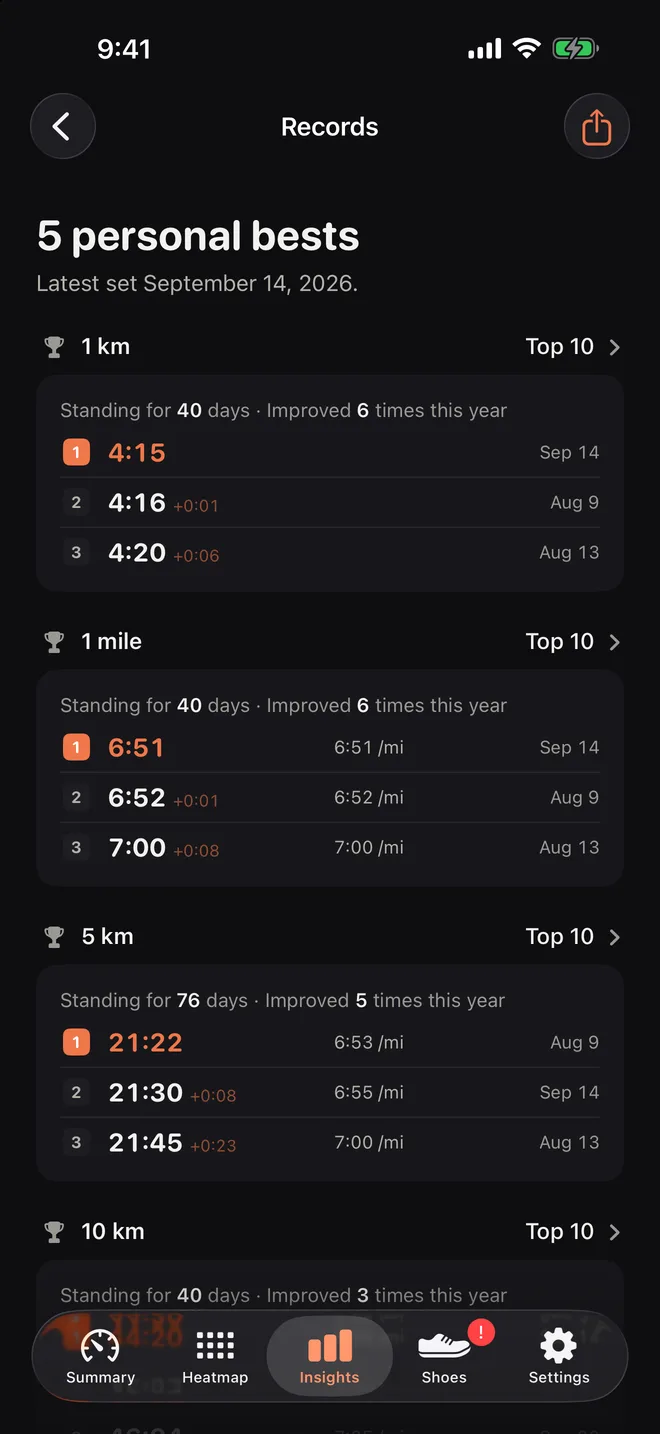

Your bests, found for you
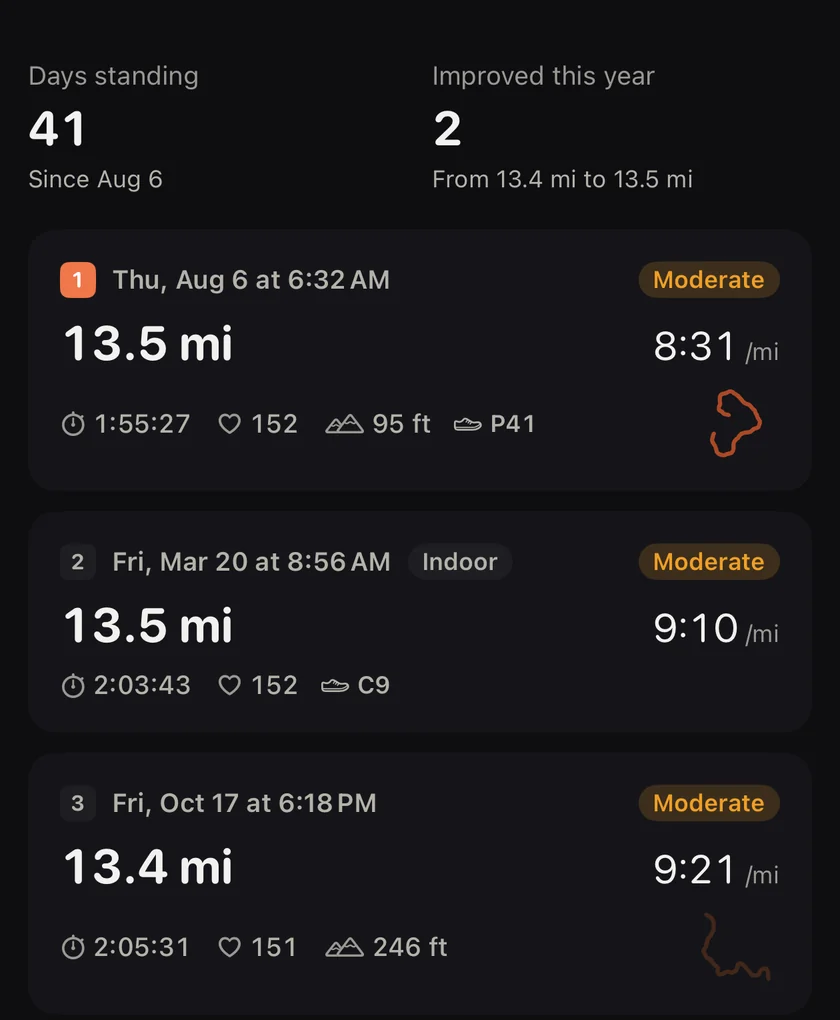
Runtile looks inside every run in Apple Health for your fastest 1 km, 1 mile, 5 km, 10 km, half marathon and marathon. You do not need to tag races or run an exact distance. A fresh best gets a trophy on the run, on the Summary screen and in the Records widget.
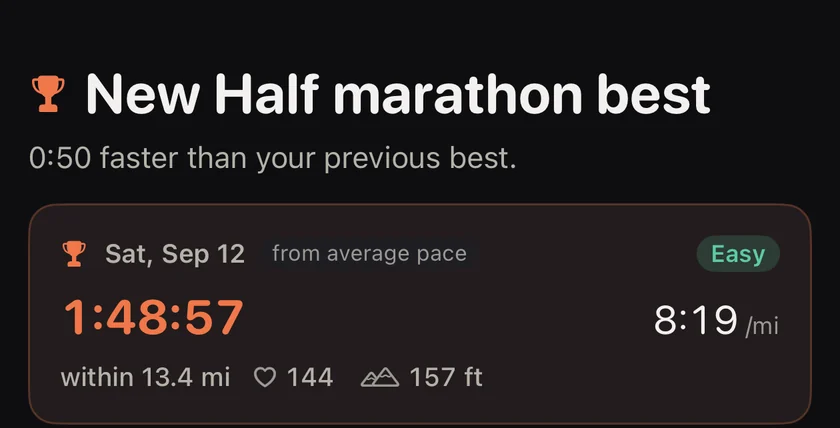
For each distance you see:
- Your best time and the pace it took.
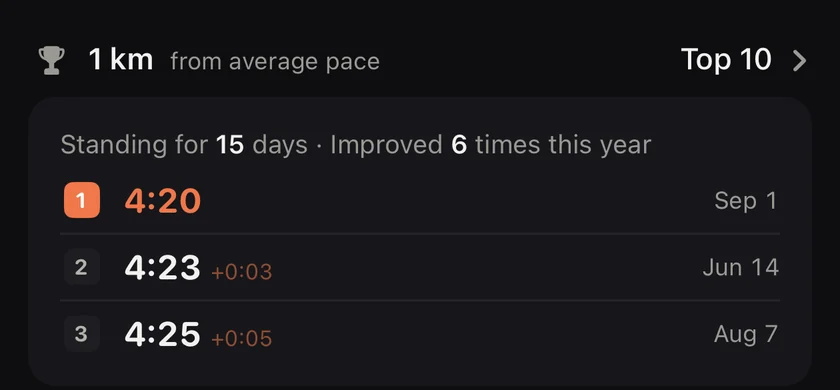
- How long it has stood, and how many times you improved it this year.
- A top 10, so a near miss still counts for something.
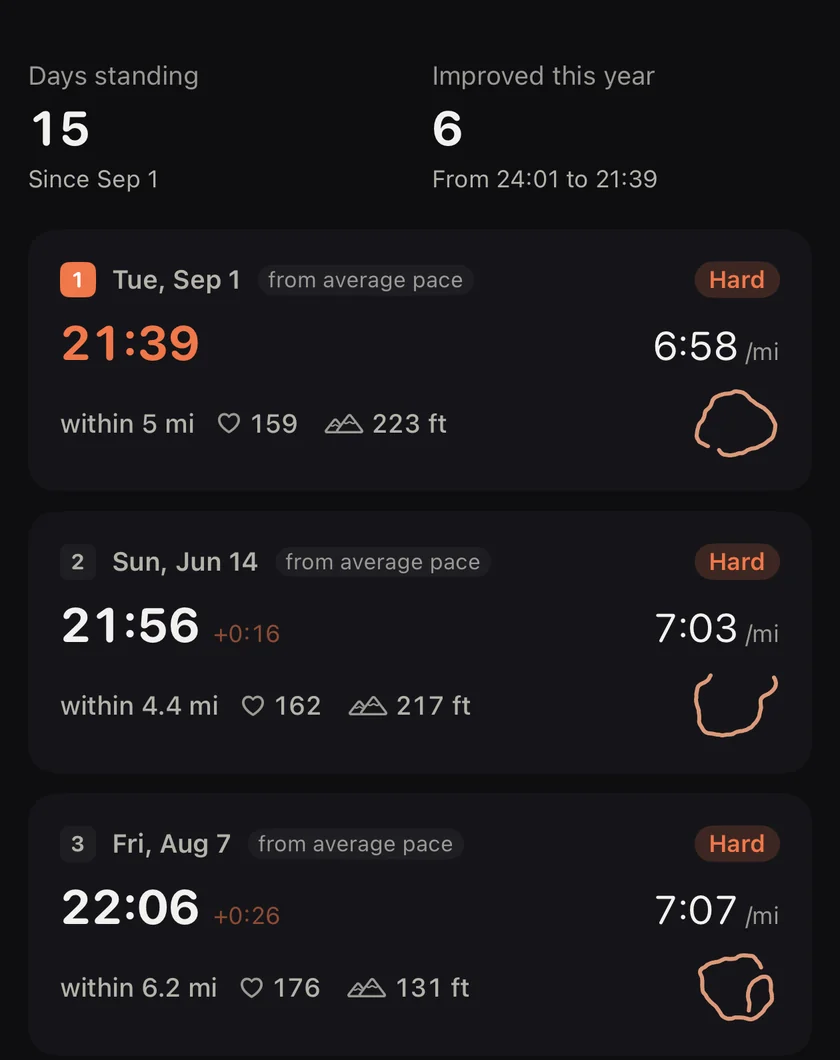
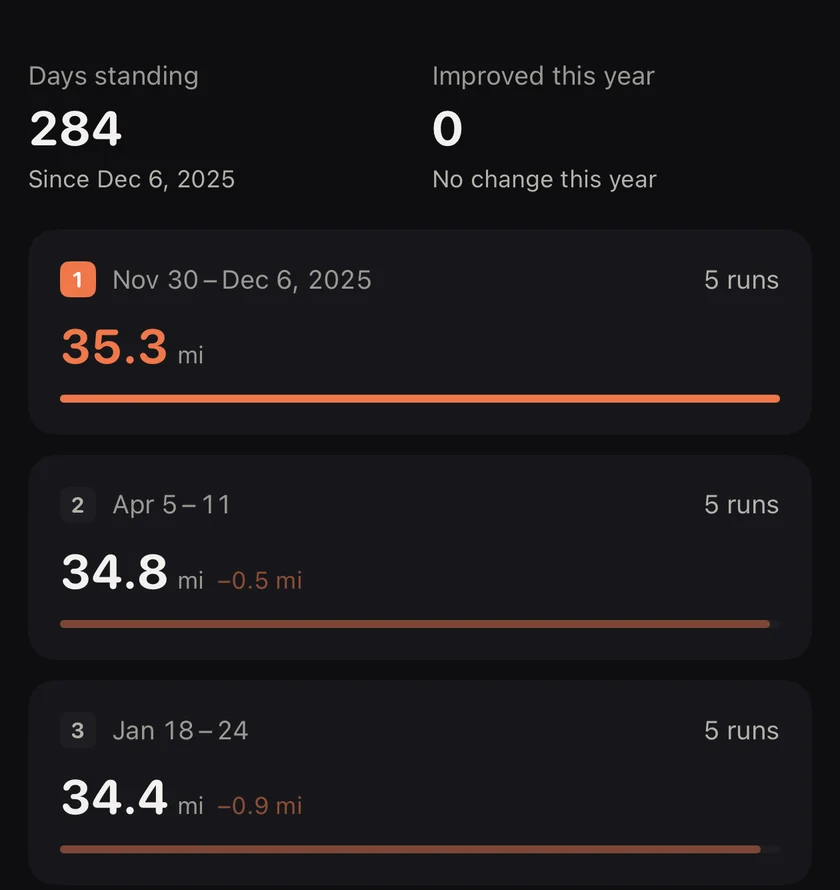
Longest runs and biggest weeks
Two more lists every runner likes to look at: your longest runs ever, and the weeks you ran the most. Great for checking how a training block compares with the last one.
What could you run today?
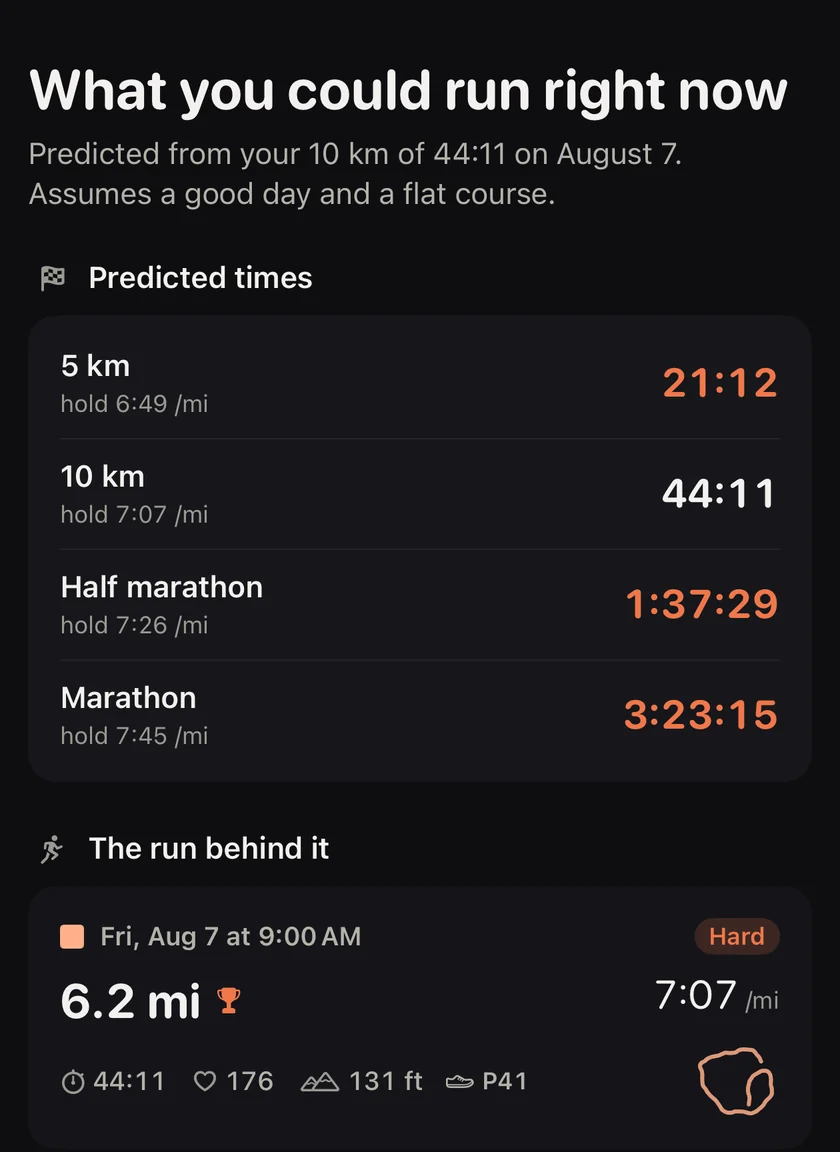
Race predictions estimate your time for 5 km, 10 km, the half and the marathon from how you have been running lately. Use them to pick a sensible start pace on race day.
Share your records
With Pro, turn your personal bests into one card and share it with your club or your group chat.
Questions
Do I have to run exactly 5 km to get a 5 km best?
No. The fastest stretch of any run counts, so a quick 5 km in the middle of a 10 km run can be your best. Runs without a GPS track use their average pace and are marked as estimates.
What is free and what is Pro?
Your best time at every distance and the full top 10 for 1 km and 1 mile are free. Pro opens the top 10 for 5 km, 10 km, the half and the marathon, your longest runs, your biggest weeks and race time predictions.
How are race times predicted?
Runtile takes your best effort of the last 90 days (or the last year when the last three months had none) and scales it to other distances with Riegel's formula, the same one coaches use. It assumes you have trained for the longer race, so treat the marathon time as a best case.
Related guides
- Training2 min read
Cadence, stride, vertical oscillation and ground contact time explained
Your watch records running form metrics. Here is what each one means in plain words, what typical values look like, and which ones are actually worth changing.
- Training2 min read
Reading a pace heatmap: fast days, easy days and the 80/20 rule
A year of runs as coloured tiles tells you more than any list. How to read the colours, what a healthy pattern looks like, and why most of your tiles should be dark.
Start with your last year of runs.
Runtile reads what is already in Health. Your history appears in seconds, no account needed.